Read on SUBSTACK
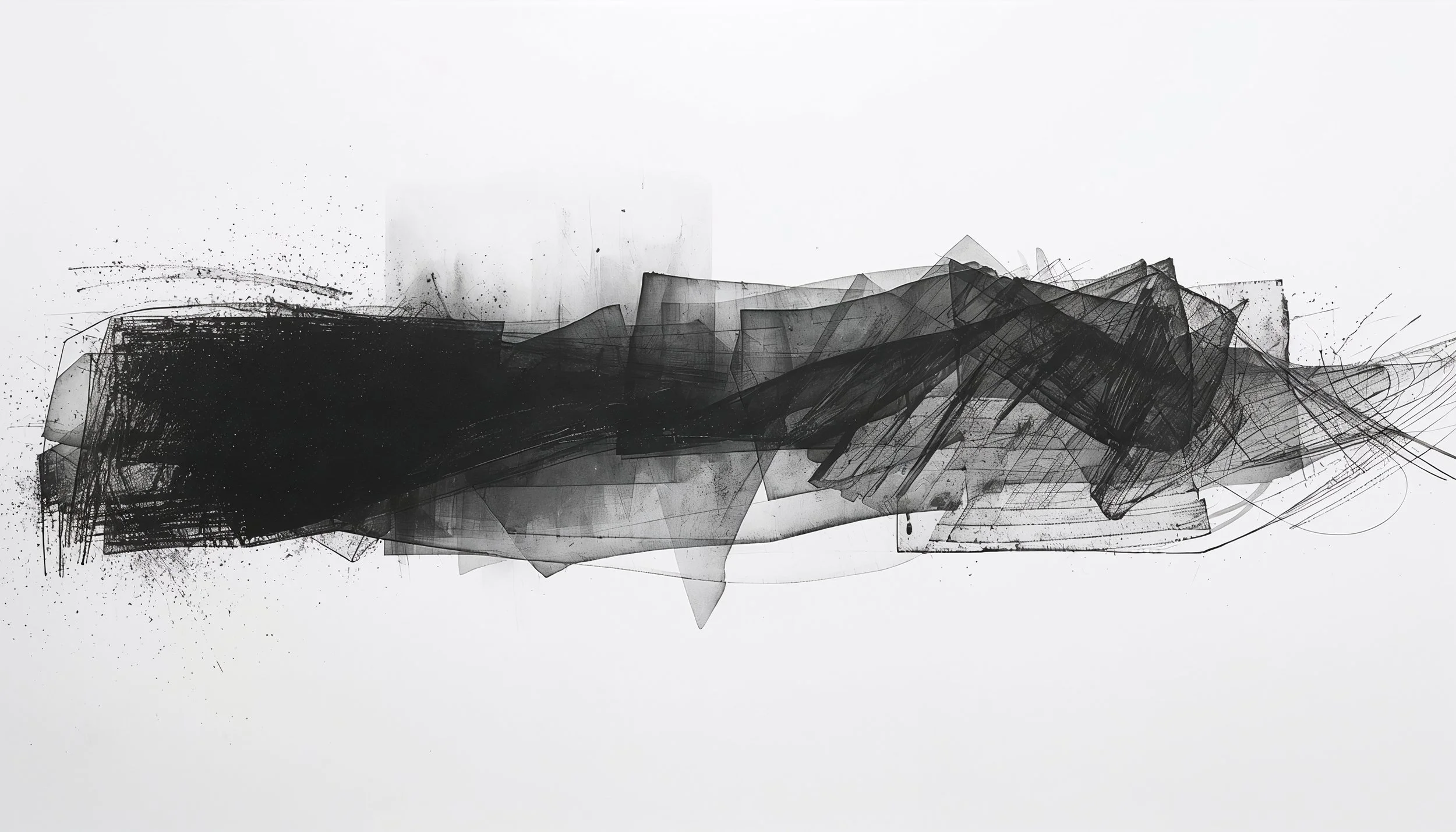
I asked AI to do something a bit ‘Cy Twombly’-like. It failed, but it is a nice enough mark.
There's this nagging feeling most designers carry around. It sits in the background, quietly suggesting you need better tools, more skills, ideal conditions before you begin.
I used to entertain that feeling.
Then I came across Arthur Ashe's quote: "Start where you are, use what you have, do what you can." Something clicked. The quote was deceptively empowering. It dared to propose that now and here may be as perfect as it needs to be as a condition of beginning to work.
Don't wait. Don't improve the situation before acting. Just start.
The Reality of Commercial Practice
Here's what actually happens in commercial practice—whether you're working in architecture, interiors, graphic design, or UX, whatever: you obtain a client, and with that client comes a timeline and a set of opinions.
You can't wait even if you want to.
So what happens if you turn it on its head and say right now is good enough? I learned this early in my career, and I've spent time getting comfortable with it. The comfort didn't come immediately. When you're fresh out of design school, you've been practicing for several years with ideal conditions.
The constraints are curated, rather than received.
Students get comfortable with this, without even knowing it. Practice in reality is much more battering. It takes time to get used to the real constraints: money, time, fickle opinion. I remember rubbing up against these things and finding it different. Not problematic, just different.
When Stakeholders Don't Get It
On one of the biggest jobs I acted as principal designer on in my early years after architecture school, we came up against a marketing team who frankly had a superficial take on what we were trying to do. They dumbed it down for the market that they perceived would engage.
It was disconcerting.
We had to roll with it. You quickly learn to manage both expectations and emphasis. You don't disclose what you are necessarily doing, but translate the creative action into a form that the stakeholders can consume. This requires both flexibility and agility.
It's nuanced. The same thing, presented with different emphasis, would either gain support or friction, depending on the quality and strategy of communication.
And here's the thing: it certainly changes the design.
The constraint is real, and present in all projects. There is no point pretending it is not a reality, so you are going to be affecting the design with stakeholder expectations. At the extremes, this causes a problem—when a stakeholder wants something explicitly wrong or undesirable. But that situation is rare, truth be told.
Usually you are in the middle ground, where there is still room to move creatively.
Mining Constraints for Their Native Language
There are countless examples of received constraints pushing projects toward better solutions. The most obvious one in architecture is when a builder has constructive and legitimate input, and pushes the project towards a specific constructional system or material.
Take precast concrete.
Precast concrete has a weight, material property and visual logic to it. If your building is being constructed out of this material it should explicitly inform the language and physical making of the building.
You can fight it, or mine the material for its native expressive language.
I prefer to do the latter.
This works for other constraints too, but the language is different. If you have to design a report as a graphic designer, this will need to happen in a tight timeframe. The availability of the content—when the final copy, artwork and images are available in the production process—will influence the hundreds of tiny decisions made by the designer.
Ideally, your graphic designer might want to lay out the document after the content is final. In reality, this rarely happens, so there is a skillful translation and anticipation of what the content will do in and to the document.
The pro designer designs the document anyway.
The Power of "Anyway"
That word—anyway—carries weight.
I picked this up very early on. It is just survival as a young designer. You get on with it, and either resist the un-ideal nature of the project process, or accept it as part of the creative challenge.
When you're staring at the blank page, the empty site, the unmarked canvas, there's still that first moment where you have to make the first move with imperfect information and imperfect skills.
Make any mark, no matter what it is.
That is the response to the blank page. In writing, which is my first medium, it involves beginning anywhere and just writing. The logic of the piece will fall out of the process of production. You have to have faith in this, and you only learn to have faith in it by repetition.
Seth Godin talks about this in his book The Practice: Shipping Creative Work. There is a process, but no guarantees. You move forward anyway.
The Leap of Faith Built Into Design
Most designers, in their own way, learn to be very good about doing this. If there was no leap of faith built into the process of design, nothing would ever get started let alone completed.
There are those rare moments when the gesture on the page becomes form. But often there are lots of aborted starts.
You move forward anyway.
The nagging feeling still exists in the background for many people. They know, intellectually, that they need to just make any mark. So what's actually stopping them?
Frankly, it's the difference between a seasoned pro and a dilettante.
The pro knows that to move forward, you just have to start and move forward in some way. The dilettante can afford to delay commitment, and burn time. You don't have the luxury of this in real practice.
Learning Without Real Constraints
What about someone trying to become a pro, maybe working on personal projects or building a portfolio? They don't have a client forcing their hand yet.
It is harder to learn how to deal with real constraints when you don't have real constraints, but that kind of practice has a place, early in your career. You just need to make the most of the freedom that affords.
Which ironically makes it harder to achieve really good work.
Curated constraints give you a false sense of control. Received constraints—the ones that emerge from real practice, real clients, real timelines, real budgets, real opinions—these force you to develop skills you didn't know you needed.
Translation. Anticipation. Flexibility. Agility. The ability to mine constraints for their native expressive language rather than fight them.
These are not workarounds. These are core creative skills.
Start Where You Are
The Arthur Ashe quote still holds: Start where you are, use what you have, do what you can.
You don't need permission. You don't need ideal conditions. You don't need to wait until you're ready.
The designer designs the document anyway. The architect shapes the building anyway. The writer writes anyway.
Make any mark. The logic will fall out of the process of production. You'll learn to have faith in this through repetition, through survival, through getting on with it.
Right now is as perfect as it needs to be as a condition of beginning to work.
So begin.