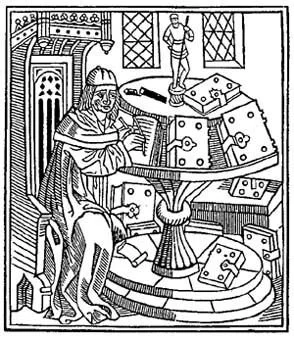
I surrender
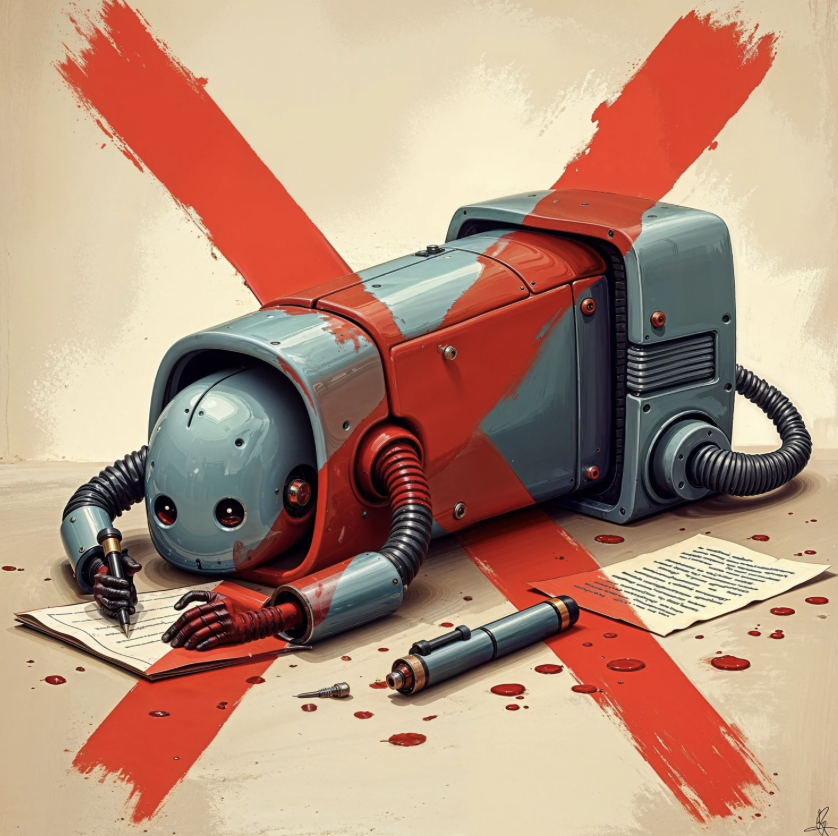
I surrender.
Writing by AI is now good enough to serve the purposes of most architectural practices and most design practitioners.
The production of design copy is not the writing of War and Peace, and neither is it the elaborate, virtuosic lacing-together of a King Lear manuscript or a Macbeth. It is workaday writing, even when lyrical - clerk’s writing - at its best, rendered free of jargon and free of obscurity, directly observational. It is writing, if well-crafted in relation to design, that states what was obvious to the observer - and thus it renders that observation captured, trapped and hopefully insightful. Transmissable: able to be moved from one mind to another. And AI? If you provide the right prompt, what the designer will get out of AI will be good enough, albeit always needing a thorough and questioning edit. It will be good enough, and sometimes even better than that depending on your need.
What does this mean for me and those like me, who insist on pursuing a practise of writing the ‘analog’ way? It is a question I have pondered for a while now. I love writing and had been concentrating earnestly for several years on how the business of hand-made writing could be useful and constructive to design practitioners. I have recently realised that it is time to surrender that capacity to the machines. I suspect that I will never make a living out of writing for architects or of architecture, for interior designers or design practitioners of other kinds - once maybe, but not now. The machines have won the race to possess, perhaps, the most practical and useful toolkit in the history of writing as a utilitarian process.
So what is left? For me, and those like me, who have been quietly honing the craft of design writing for more than 25 years?
Step one seems to be, I increaingly suspect, surrendering the middle ground. Acknowledging that the Djinn is out of the un-stoppered vessel. Writing for general practice is now easily handled by the machine, and with a thoughtful prompting and moderate polishing, you can get a good result in what amounts to minutes if not seconds.
Again I ask: what is left?
In constraint and new conditions of operating, there are always new possibilities. Unexplored potentials. I contend that this is not blind optimism: it is another instance of careful observation. This is what I have observed, as a designer, a writer, and a design writer.
Writing is now abundant, a commodity.
This is not to be feared: it is to be accepted. Again, herein lies possibility.
After a century or more of adulterated prose, I think the designer’s focus can now shift to the specifics of the craft - the crafting of sentences and paragraphs - and their very particular shape, from and materiality. Their rhythm, their texture. This should not be alien to the designer - I am speaking about paying attention to the qualities of a given medium. Isn't that what we are trained to do?
If machines write the everyday prose needed for design practise, what is left over can be, perhaps, newly discovered by those very practitioners who pay so much attention to the shape, form and materiality of the physical world they manipulate in their day jobs. In other words (somewhat glib pun intended), it might be time for designers to stop taking words for granted, and engage in a searching and questioning way for an elevated role for prose in the process of design.
Writing, for designers, can be reborn as just another medium of manipulation and experimentation; just like porcelain, steel, glass or timber. A medium newly understood on its own terms, a medium capable of the conveyance of meaning, which the physical world is so poor at in the absence of language. (And that despite the post-structuralist design project of the 1990's, my formative decade.) This reborn medium can stand proud in relation to the equally proud, dumb substance of the physical and visual world that is the designer’s primary linguistic milieu.
When the machines do writing so effectively, what then does it mean for a human to write? Something new.
I know that there is still something rich to be gained from the process of analog writing in the margins, now that the centre of the field has been vacated and that seems to be where the machines roam free.
Writing analog can become something slower, something more hand-made - a wholesome practise enacted for its own sake; rarer and for a different, less utilitarian purpose than communicating a planning provision, captioning a project on your website, or even winning the next job, however important those things may be. Slow writing, anyone? (I note here that I am not the first to coin the phrase, that credit goes to Andrew Gallix writing in The Guardian in 2011. I am, I suspect, the first to link it explicitly to the world of design.)
This is a choice.
The stubborn design practitioner, (architects are the worst offenders); those who still insist after all we have witnessed that the work can and must simply 'speak for itself', will ignore the potential of this new(ly discovered) medium. They will be missing a significant opportunity, turning their back on an important moment in the history of the relationship between design and language.
Those who are perhaps more thoughtful about our current situation, and who may be curious about the genuine potential of AI and what it means for the design world beyond the instantaneous vomiting out of contrived visual confections, may see this as the opportunity that I sincerely believe it is. A new lease of life for a very old craft, an ancient but profoundly human medium. The written word.
And yes, as much as I enjoy sparring with AI in the propagation of language, this short piece was written analog style, without the use of AI at any point. Perhaps this can be, then, a proof of concept, a literal case in point.
I remain excited about what this all means for writing, for design, and for the creative process in any medium. Time to explore. Slowly.